

A women-led relationship is most useful to discuss through the actual arrangements it describes: who plans, who decides, who does the work and which choices remain personal. The label alone does not tell you whether the relationship is fair or freely chosen.
Adults can prefer different roles while keeping equal dignity and a meaningful voice. Leadership needs defined limits, ongoing agreement and room for either person to raise concerns.
Define the arrangement before using the label
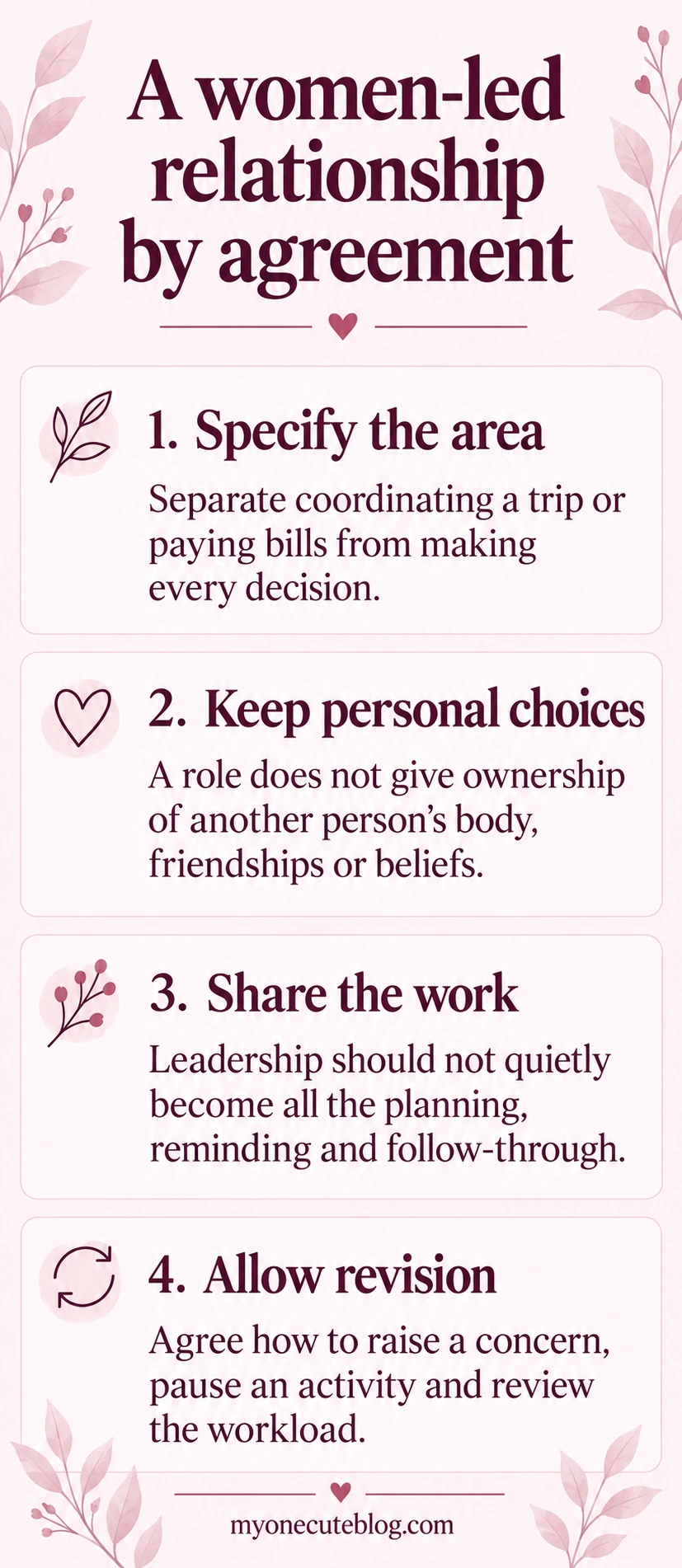
Read the guide as text
- Specify the area. Separate coordinating a trip or paying bills from making every decision.
- Keep personal choices. A role does not give ownership of another person’s body, friendships or beliefs.
- Share the work. Leadership should not quietly become all the planning, reminding and follow-through.
- Allow revision. Agree how to raise a concern, pause an activity and review the workload.
What Does Led Mean?
Before you agree to a label, write the activities you want. Planning a holiday, managing a budget, organizing social events, or making medical decisions are different forms of authority.
A couple might want one person to coordinate plans while keeping big decisions mutual. Another might divide the areas according to interest and experience. Neither needs to use someone else's model.
If you enjoy organizing travel and your partner likes handling home maintenance, then your relationship might be called woman-led because you often initiate the shared planning. You both approve of the budget, and either of you can decline the trip.
This information is useful because of the details. Without the details, your lead can become unclear, creating promises that one person sees as initiative and the other sees as permission to decide everything.
Be Allowed to Ask Why
A preference might come from enjoyment, relief, values, or experience. Ask what each other wants and what will make it easier and more satisfying.
Be cautious if the main reason is to avoid responsibility, to prove love, or to fix jealousy. A relationship cannot resolve these concerns just by giving it a new name.
You might ask your partner what feels positive to you and what you worry about losing. Answering both of these questions and concerns makes the discussion useful.
You're allowed to be interested in some parts and not others. Enjoying your partner's initiative doesn't mean that you want them to manage your friendships, work, spending, or thoughts. A partial agreement can be more honest than saying yes before you understand the details.
Always Keep Consent Important
Consent should always be part of a relationship, and it should be freely given with enough information to understand it. It shouldn't depend on threats, shame, pressure, or fear of punishment. An agreement to let one person plan a meal isn't permission to control another person's body or medical care. An agreement about social planning isn't permission to isolate someone.
Love is respect’s guidance on boundaries supports room for each person to express needs and limits. That principle applies whatever label a couple chooses.
You can agree on how either person can pause or change the agreement. A review date is important, but someone doesn't have to wait for that date to withdraw consent from an activity or to raise a concern. A written agreement is a conversation aid and not a waiver of your personal rights.
Being the Leader Doesn't Make One Partner More Important
In some relationships, one person naturally takes the lead when it comes to making plans, organizing responsibilities, or handling certain decisions. There's nothing wrong with that as long as both people are comfortable with the arrangement. But being the person who takes charge doesn't mean that their opinions, feelings, or needs are more important than their partner's.
It's important to remember that having different roles in a relationship doesn't make one person better than the other. Just because someone takes responsibility for certain decisions doesn't mean that their partner should automatically agree with everything they say. Both people deserve to feel respected, appreciated, and included in decisions that affect their lives.
This becomes especially important when disagreements happen. For example, saying something like, "I thought we agreed that I would handle these plans," gives both people an opportunity to talk about what happened. But telling your partner that they don't get an opinion because you're the leader can create resentment and make them feel that their feelings don't matter.
Being a good leader in a relationship also means being willing to listen, admit when you've made a mistake, and change your approach when something isn't working. You don't have to pretend that you always know the right answer or that every decision you make is perfect.
Remember that taking the lead should be something both people willingly agree to, not something that gives one partner permission to control or mistreat the other. A healthy relationship should allow both people to express their opinions, make decisions, and feel that their needs are equally important.
Taking the Lead Doesn't Mean Doing Everything Yourself
When a woman takes the lead in a relationship, it can sometimes become easy for her to take on more responsibilities than she originally intended. She might start out enjoying making plans and organizing things, but eventually find herself responsible for remembering appointments, managing schedules, reminding her partner about tasks, and making sure everything gets done.
The problem is that taking the lead shouldn't mean that you're responsible for handling every little detail. Your partner can still take responsibility for certain things without needing you to explain every step or constantly remind them about what needs to be done.
One thing that can help is discussing which responsibilities each person will handle. For example, maybe you enjoy planning family activities, while your partner takes care of transportation, meals, or other arrangements. The important thing is making sure that both people understand what's expected and are willing to follow through.
Imagine that Ashley enjoys taking the lead when she and her boyfriend are planning weekend trips. She likes deciding where they might go and discussing what they'd enjoy doing. But she doesn't want to be responsible for every detail. Once they agree on a destination, her boyfriend takes care of booking transportation and checking that the places they're visiting meet their needs. Ashley doesn't have to constantly remind him because he's taken responsibility for those arrangements.
This allows Ashley to enjoy making plans without feeling that everything depends on her.
It's also important to remember that responsibilities might need to change as time goes on. A new job, health problem, children, or other family responsibilities can affect how much time and energy each person has available. Just because an arrangement worked in the past doesn't mean it will always be the best option.
If taking the lead starts leaving you exhausted or overwhelmed, it's okay to talk about making changes. Being confident and comfortable making decisions doesn't mean that you have unlimited time or energy.
The goal is finding a balance where one person can take the lead in certain areas while both partners continue contributing to the relationship. Leadership should make things easier to manage, not leave one person feeling that they're responsible for everything.
Making A Map of Decisions
Divide your decisions into three groups, including personal decisions, shared decisions, and tasks someone can manage within agreed limits.
Personal decisions can involve your body, friendships, beliefs, and interests. Shared decisions can include housing, spending, parenting, or commitments that affect both people. Other tasks can include picking groceries within the budget or arranging a repair appointment.

Boundaries will depend on the relationship, but the categories show assumptions. You might find that both people support leadership and planning but still disagree about money or social contact.
Don't use the map you create to add restrictions that one partner is not able to accept. It should make the choices clear, and if the decision affects a child or someone else, their needs also matter. An adult relationship doesn't override these things.
Money and Understanding
A person who's good at administration might manage the bill payments, but both partners need to understand the commitments that affect them and have access to their own financial information.
MoneyHelper discusses different financial arrangements and the risks associated with shared borrowing. The source is UK-based; legal and banking details vary elsewhere.
Talk about spending limits, records, account access, debt, and what happens if the person handling the payments isn't there. Get qualified advice before you make big financial or legal changes.
Don't confuse budgeting agreements with permission to withhold money, take income without talking about it, or create debts in someone else's name. A healthy balance should make finances understandable and workable instead of making one person dependent on secrets or permission for their needs.
Protecting Your Life
A relationship can be close without picking up on every part of each other's lives. Each partner should have their own interests, relationships, and privacy. Talk about what happens when you take time apart before it becomes a problem. If you want to keep your Wednesday evenings for your friends, then talk about this with your partner and speak about shared plans.
Don't make access to a phone, passwords, private messages, or location a test of commitment. If people decide to share some information, look at the purpose and whether the choice is voluntary.
If a partner likes to coordinate social events, they should still ask their partner about interests and availability. This doesn't mean they should accept every invitation on the other person's behalf without talking to them first. Consulting with your partner can keep shared organization and personal control visible in their everyday lives.
Remember That Sexual Consent Is Always a Separate Decision
Some people believe that women-led relationships involve certain sexual roles or expectations, but that isn't always the case. Every relationship is different, and just because a woman takes the lead in everyday decisions doesn't mean that either partner has agreed to a particular type of sexual activity.
If physical intimacy or sexual preferences are something you want to discuss, it's important to have that conversation separately. Agreeing to a certain relationship structure doesn't automatically mean that your partner has permission to initiate sexual contact whenever they want. Even if you've been intimate before, are married, or have written down expectations for your relationship, both people still need to freely agree to what's happening at that time.
It's also important to remember that either partner has the right to say no or change their mind. Nobody should feel pressured to participate in something because they're afraid of being punished, embarrassed, or accused of not being committed to the relationship. Physical intimacy should never be used as a way to control someone or prove their loyalty.
If you and your partner are interested in activities that involve greater physical or emotional risks, make sure you understand those risks and get reliable safety information from qualified sources. The important thing is that both people feel comfortable, understand what they're agreeing to, and know that they can stop at any time.
Talk About How You'll Handle Disagreements
Even when both people are comfortable with a woman taking the lead, disagreements are still going to happen. That's why it's important to discuss how you'll handle different opinions before a serious problem comes up.
For example, you might agree that either partner can ask to talk about a decision or take a break from a conversation when things become stressful. You could say something like, "If either of us is uncomfortable with a decision, we should be able to talk about it without feeling that we're being disrespectful." This allows both people to express their concerns without turning every disagreement into an argument about who's in charge.
It's also helpful to recognize that not every decision needs to be handled the same way. Something small, like making a dinner reservation, might be easy to work out using a plan you've already agreed on. But bigger decisions involving finances, housing, or other important responsibilities deserve more time and discussion.
Remember that having a leadership role doesn't mean that your partner loses the right to disagree. If every concern is treated like disrespect or betrayal, it might be time to reconsider whether the arrangement is truly working for both people.
A healthy women-led relationship should allow both partners to communicate honestly, express their needs, and feel respected even when they don't agree. Leadership should help the relationship function, not prevent important conversations.
Be Willing to Change Roles When Life Changes
Just because you and your partner agree on certain roles doesn't mean those arrangements have to stay the same forever. Life changes, and things like illness, work schedules, family responsibilities, or personal challenges can affect what each person is able to handle.
For an illustrative example, imagine Jessica normally taking the lead when it comes to managing the household budget, planning appointments, and making long-term decisions. But after developing a health problem, she realizes that she doesn't have the energy to keep up with everything. Her partner, Michael, begins handling some of those responsibilities while she focuses on her recovery.
Instead of viewing the change as Jessica losing her leadership role, they recognize that supporting each other sometimes means adjusting their responsibilities. They also decide to put off decisions that aren't urgent until Jessica is feeling better.
It's important that both partners understand how the household operates, even if one person normally handles most of the planning. Both should know how important bills are paid, where necessary information is kept, and how everyday responsibilities are managed. This can make things easier if someone becomes ill or needs extra support.
Remember that being the leader doesn't mean you have to be strong, confident, or in control every minute of the day. You're still allowed to feel tired, ask for help, and change your mind. At the same time, being the supporting partner doesn't mean you're incapable of making decisions or handling responsibilities.
The goal is to create a relationship that works for both people, even when life doesn't go according to plan. Being flexible and supporting each other can help maintain a healthy connection without feeling that you have to follow certain roles no matter what happens.
Recognizing Control
No gender relationship label allows threats, isolation, violence, or abuse to be acceptable. A woman can act abusively, and a person of any gender can experience harm.
Power and control can be exercised through harmful behavior in a relationship of any gender configuration. A stated agreement does not make fear or retaliation harmless.
If you fear the consequences of disagreeing or leaving, seek private support through a safe communication method. You do not need your partner’s approval to ask about your options.
Be cautious if a label is used to end every discussion, such as, "You agreed, so you can't question this." Consent requires that questions and changing needs stay open. An arrangement doesn't mean that it has to be maintained if you want to discontinue the agreement.
Talking to Other People
You don't have to explain private relationship preferences to every friend or relative you talk to. If you decide you want to share, talk about the wording together, and don't reveal intimate information about your partner without asking for their permission.
You might tell them that the division of responsibilities works well for both of you and that you look at it together. You can answer practical questions without telling everybody your arrangement or saying that it's something others should follow.
Privacy should still allow room for outside support. Either person should be able to talk with a trusted friend, counselor, or advisor about their concerns. An agreement to keep personal details secret should never be a rule against asking for help.
Allow for Changing Agreements
If the relationship is safe and both people are interested, start with one clearly defined area. Interest alone does not establish safety. Pick something that is manageable, such as planning weekend activities on a shared budget.
Include in the agreement what still requires a conversation and what either person can decline and then look at. Talk about the work that's involved, not who has the final word.
After a few weeks, ask if the arrangement was useful, fair, and enjoyable. Did it reduce confusion or create extra work? Allow both people to talk about what they felt about the change.
Women-led relationships are best understood through the experience of people who are involved. A label can talk about preferences, but the practical needs should be consent, balance, and room for both partners to stay who they are.
Outline a freely chosen role agreement
Choose a decision area to get a practical outline. A relationship label cannot replace each person’s consent.
An earlier agreement is not permanent consent. Both people must remain free to question, revise or leave an arrangement.
Use the questions and examples in the article above; the draft builder needs JavaScript.
15 questions readers ask
1. What does women-led mean in everyday life?
People use the term differently. It may describe initiative in shared planning or defined decision roles. Explain the actual responsibilities instead of assuming that the label means the same thing to both partners.
2. Does it mean women are naturally better leaders?
No. Gender does not establish competence, entitlement or consent. Roles can reflect preferences and skills without making claims about an entire gender.
3. Can leadership be limited to one area?
Yes. One person might coordinate travel or household administration while major decisions remain mutual. Define the scope and what still requires discussion.
4. Does the supporting partner lose an equal voice?
They should retain dignity, personal choices and the ability to question decisions. A preferred role does not make one person more important.
5. What decisions should remain personal?
Your body, beliefs, friendships and other personal choices do not become another person’s property. Shared responsibilities can require coordination without removing autonomy.
6. How do we avoid adding to the woman’s workload?
Assign complete tasks with clear ownership. The other partner should handle appropriate planning and follow-through, rather than expecting the person leading to supervise everything.
7. Can we use different roles for different subjects?
Yes. You can divide areas according to interest, ability and circumstances. A single person does not need to lead in every part of life.
8. How should money be handled?
Both people need an understanding of commitments that affect them. Discuss access, spending limits, records and backup arrangements, and get qualified advice before major financial or legal changes.
9. Does managing bills justify controlling a partner’s income?
No. Administrative responsibility is different from withholding necessities, taking money without agreement or creating debts in someone else’s name.
10. Does this relationship structure imply particular sexual roles?
No. Sexual preferences and consent need separate discussion. Everyday leadership is not permission for any sexual activity.
11. Can someone withdraw consent after agreeing to a role?
An agreement should leave room to stop an activity, raise concerns and revise responsibilities. A review date does not require someone to tolerate unwanted contact or harm until then.
12. Should we share passwords to prove trust?
Do not make account access a loyalty test. Discuss any sharing voluntarily, including purpose, privacy and how the arrangement can change.
13. How can disagreements be handled?
Agree on a way to question decisions and revisit important issues safely. Treating every concern as disobedience prevents meaningful participation.
14. What if illness or work changes what we can do?
Revise the responsibilities around current capacity. Someone who usually leads can need help, and a supporting partner can take initiative without the relationship losing its value.
15. When does leadership become control?
Fear, threats, isolation, sexual pressure or retaliation are serious concerns whatever label is used. Seek private specialist support if disagreeing or leaving feels unsafe.