

After being hurt in a relationship, you may want closeness while also wanting distance, privacy or a slower pace. Those wishes can exist together. You do not have to start dating to prove that you have moved on, and you do not have to become completely confident before considering a new connection. The next step can be something you choose, with limits that make sense for your life.
In this article
Decide what you want room for now
You might want to meet someone, spend more time with friends or concentrate on other parts of life. There is no required sequence from heartbreak to dating. Consider your current wishes alongside time, responsibilities and energy, rather than comparing your progress with someone else’s.
If you are interested in dating, choose a manageable beginning. A short meeting in a public place may suit you better than a long evening or an immediate promise of commitment. Decide how you will get home and how much time you want to spend together.
Wanting company does not oblige you to continue a particular connection. You can enjoy a conversation and still decide against a second date. You can also feel nervous and remain curious. Neither feeling alone needs to make the decision for you.

Let trust develop through ordinary actions
Trust is easier to assess when you have repeated experiences to consider. Notice whether someone keeps plans, communicates changes, respects a no and shows interest in what matters to you. A compelling story about how different they are from your ex is less useful than consistent behaviour over time.
Past experiences can influence what you notice, but a worry is not automatically either a warning or an overreaction. Ask what happened in this situation. Did someone miss one message, or repeatedly disappear after making plans? Did they misunderstand a request, or continue after you clearly declined?
Where it feels safe, a direct question may help: “When I didn’t hear about the changed plan, I wasn’t sure what to expect. How would you handle that next time?” Listen to the answer and look at subsequent actions. You are allowed to decide that an arrangement does not suit you.
Share personal information at your own pace
Being open does not require telling someone your whole history early on. You can share what is relevant to the present: “I like to take time before making commitments” or “I don’t want to discuss that experience yet.” Someone else’s curiosity does not create an obligation to disclose.
A small disclosure can show you how a person responds. Do they listen without pressing for more? Can they hear a preference without making it about their own disappointment? You can pause or change the subject even after you have started talking.
Be truthful about what you can offer too. If you want casual dating, are uncertain about commitment or need limited contact, say so. A slower pace works best when both people understand it and can choose whether it suits them.
Keep limits and outside support
Continue friendships, personal interests and ordinary routines when a new relationship begins. Having other people to speak with can give you company and perspective without requiring your partner to meet every need. You can keep private time even when a connection feels exciting.
Discuss limits around affection, communication and privacy. Love is respect explains why respecting another person’s boundaries includes accepting that their wishes may differ from yours. You do not owe passwords, constant availability or physical contact as proof of trust.
Pressure, threats, intimidation and efforts to isolate you deserve attention. You do not need to become more vulnerable to someone who ignores your limits. If you are afraid of their reaction, consider confidential support when deciding how to reduce contact or leave.
Review the connection without judging your worth
After spending time together, ask a few practical questions: Can I be honest about a preference? Is the effort reasonably mutual? Do I feel able to change my mind? These questions may be more useful than trying to predict whether you will ever be hurt again.
No choice can remove all possibility of disappointment. If a relationship ends, that does not show that you failed to love yourself enough. Someone else’s dishonesty or cruelty remains their responsibility, even when you can identify something you want to do differently in future.
Your next step might be another date, a conversation, a pause or no further contact. If past hurt keeps disrupting daily life or feels difficult to manage alone, a qualified counsellor can offer a place to talk. Dating can wait while you decide what support and connection you want.
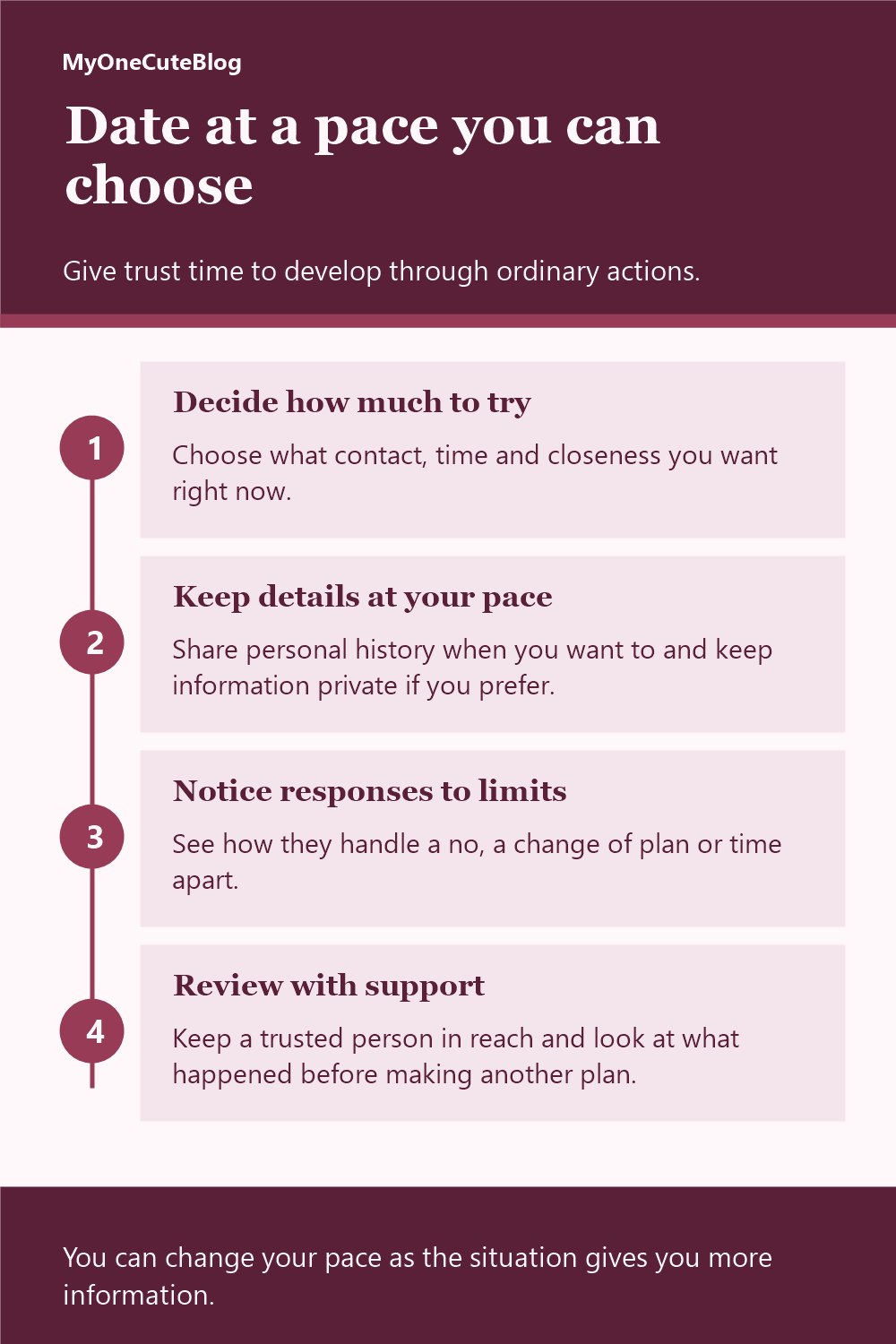
Read the infographic in text
Date at a pace you can choose Give trust time to develop through ordinary actions.
- Decide how much to try Choose what contact, time and closeness you want right now.
- Keep details at your pace Share personal history when you want to and keep information private if you prefer.
- Notice responses to limits See how they handle a no, a change of plan or time apart.
- Review with support Keep a trusted person in reach and look at what happened before making another plan.
You can change your pace as the situation gives you more information.